

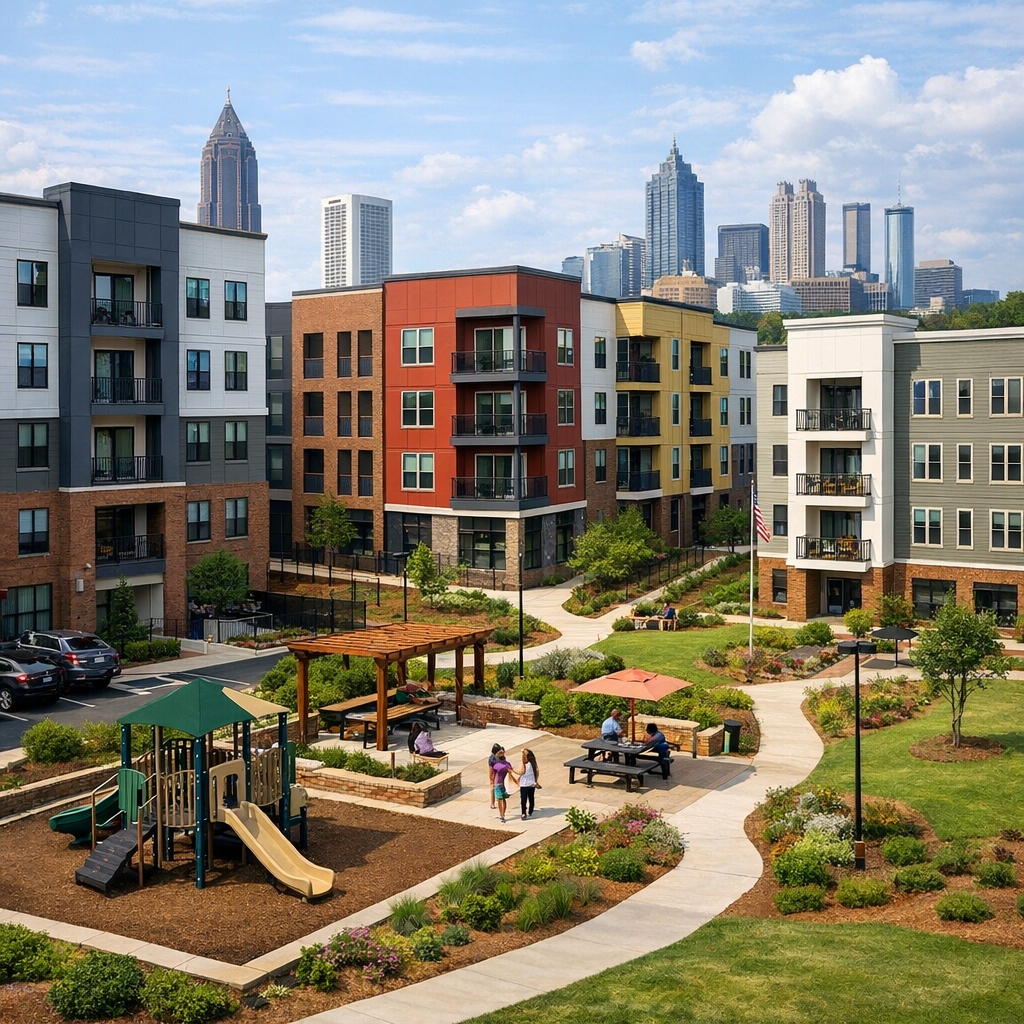
Atlanta is intensifying efforts to address affordable housing, with new developments and increased support for low-income families.
Habitat for Humanity’s Langston Park Development
Habitat for Humanity, in collaboration with the Carter Work Project, is developing 24 affordable housing units in Atlanta’s Sylvan Hills neighborhood. This marks the organization’s return to the city since 1988. The development, named Langston Park, includes a mix of single-family homes and multifamily townhomes—Habitat Atlanta’s first venture into townhome construction. The $200,000 homes will be sold to qualifying buyers at no interest, with income-based mortgages.
Atlanta Housing’s Increased Voucher Support
Atlanta Housing is significantly increasing its support for low-income families by raising the assistance provided through its Housing Choice Voucher Program from $25,000 to $60,000. This move aims to address the challenges posed by a tight housing market and a diminishing supply of affordable homes, making homeownership more attainable for eligible families.
Regional Housing Summit Findings
By 2035, metro Atlanta must preserve or create 116,000 affordable housing units to address a critical affordability issue, as discussed in the Atlanta Regional Commission’s (ARC) Regional Housing Summit. The region lost 250,000 homes priced below $1,250 between 2019 and 2024, impacting all 11 counties in the ARC. Experts stress the need for a multi-county effort to address the shortfall.
Challenges in Housing Development
The City of Atlanta has paused a proposal by the Atlanta Mission to build a $200 million campus—including a homeless shelter and affordable housing—along the Westside Beltline Trail. This decision mandates a 90-day comprehensive community impact review before any development can proceed. The proposed 15-acre site has drawn controversy due to its prime location, with critics debating whether the area should prioritize social services or economic development.
These initiatives and challenges highlight Atlanta’s ongoing efforts to tackle the affordable housing crisis, balancing development with community needs and economic considerations.